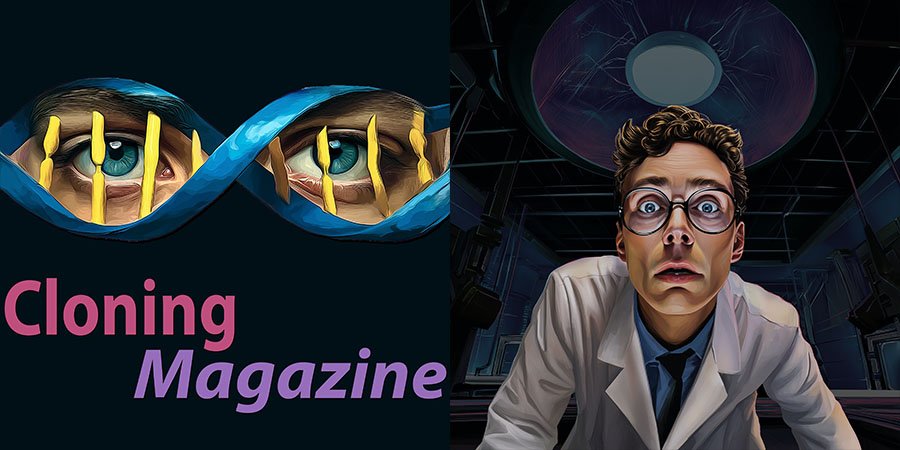
The Crimson Throne
They tell me Mars was once dead. That is a lie told by those who arrived too late.
Mars has always been alive, resentful and slow to forgive. It merely waited for a ruler arrogant enough to believe he could command its spirit. My father was such a man.
He sat the Crimson Throne when I first understood what the looming aspect of fear was.
The great Throne rose from the caldera of Olympus Mons, not built so much as extruded. It was formed layer by layer, from fused regolith, smart alloys, and memory-metal lattices. It was less a seat than an interface, a place where planetary systems and human ambition negotiated through terrestrial symbolism.
When my father resided upon it, the mountain listened and obeyed his commands.
The planet metaphorically leaned in closer in an effort to interact.
Elon Musk, Emperor of Mars, was not the man whose face had once smiled from twentieth-century screens. That man had been constrained by mortality and doubt. The Emperor was something else: a perfected clone, iterated until diseaseand aging had been removed like redundant code.
He wore immortality lightly, as if it were a clever parlor trick he might grow bored of someday.
I stood below him with my siblings, nine of them, each dangerous in a different way and felt the gravity shift.
Mars does that sometimes, all of a sudden.
“Come closer,” Father said.
None of us moved at once. Invitations on Mars are indistinguishable from insidious traps.
“I didn’t summon you today to kill one another,” he added, voice calm, amused. “That will come somewhat later.”
A ripple of laughter moved through the group, thin and practiced since childhood. Humor was one of the few traits cloning preserved without degradation. It was efficient. It masked impending fear.
I am the fourth-born, though birth order means little when gestation vats replaced the many wombs. Still, family hierarchies assert themselves, they always do.
You can call me Kael. Names change, survival doesn’t.
To my left stood Xan, tall and narrow-eyed, already calculating the yield of Olympus Mons if it were hollowed and converted into a fusion spine. Terraformer, Engineer, inevitability given the aspect of flesh.
Beside him, Seraph watched the ceiling rather than the Throne, she always was preoccupied with it. She had walked Phobos without a tether and claimed to hear voices hidden in the stone. She smiled too easily.
Thorne leaned against a basalt column, pretending majoritive disinterest. He governed three city-states and sat on a dozen proxy councils without ever raising his voice. His weapons were contracts, used among the careful distribution of blame amongst the politicos.
The others: Nyx, Orion, Lyra, Cass, Juno, Vale. They formed a loose but congealed semicircle. Ten heirs, Ten knives and One throne.
Father surveyed us with an austere visible pleasure.
“You’ve all grown,” he said. “Mars has shaped you very well. But the time has come to decide what type shape it will take next.”
The Crimson Throne pulsed with energy, its surface reconfiguring as if acknowledging relevance of the statement.
“You will compete,” Father continued. “Not because I require a successor, I do not intend to die. But because Mars requires conflict, stagnation is death. Ask what remains of the Terra-Earth.”
Earth was a cautionary tale on the Red Planet. It was very overgrown, overruled and mostly strategicly forgotten.
“There are Crimson Paths on this planet,” he said. “Not roads, Not tunnels, just endless Possibilities. You will find them or they will find you. Walk them far enough, and Mars will decide who among you may rule.”
Seraph laughed softly yet emphatically. “You’re letting the planet choose?”
Father smiled benevolently austere.
“I’m letting you choose,” he said. “Mars will merely keep score in the competition.”
The Throne’s surface shifted again. A recursive red symbol emerged and floated in the air, angular and very ominous.
The Red Sigil.
“Whoever commands the Sigil commands the Throne,” Father said. “At least until I decide otherwise.”
“And the dispensation for rest of us?” I asked.
Father’s acute gaze found mine, I hated that. He always knew which of us would ask the wrong question.
“You survive,” he said. “Or you don’t. I made enough of you that the loss would be… acceptable.”
The Crimson Throne hummed and the room vibrated slightly. Somewhere deep beneath Olympus Mons, Mars shifted its weight, it vigor.
That was the moment I understood the truth, this was never about inheritance. This was about establishing proof.
The floor turned to transparently and dissolved beneath Seraph first.
She reacted but did not audibly scream. She instead laughed as the Crimson Path unfolded beneath her feet, spiraling downward into red light and dust. The planet accepted her without ceremony, thrashing in its tactical volume.
Xan swore and activated his suit mechanism. Thorne vanished in the opposite direction, already negotiating with the passing shadows.
One by one, my siblings disappeared into the decorum of Planet Mars.
I waited.
Father raised an eyebrow. “Afraid?”
“No,” I said. “Just curious.”
“About?”
“Whether you’re watching,” I replied.
He leaned back on the Crimson Throne, “Always, my boy.” The ground opened a textural chasm beneath, Mars absorbed me.
Calibration Tests
Mars did not drop me, it placed me, well sort of.
I landed standing, boots sinking a measured centimeter into dust the color of old blood. The sky above was disfigured and fractured. Bands of crimson light intersected with hard, indifferent stars, as though reality itself had been cracked and only partially repaired. Gravity settled around me like a blanket with deliberate restraint.
The Crimson Path sealed behind me without a glitch, without a sound. That audacious silence was my first lesson in adaption.
I stood on a plain of shattered towers, each structure carved into shapes that suggested purpose but denied comprehension. These were not ruins, ruins imply a sense of decay. These had been abandoned mid-thought, as if their builders had stepped away during an argument they never finished. Mars does not forget a fury of cognizant interrupted ideas and false endings.
My suit recalibrated automatically, adjusting atmospheric tolerances and gravimetric feedback, no alarms sounded. That phase of operation worried me more than any rudimentary failure ever had. I took three capricious steps before the applause began. I turned, slowly I stepped, inch by inch.
Nyx emerged from behind a leaning spire, her cloak phasing between opacity states like an indecisive ghost. She favored misdirection over speed, invisibility over force. Mars seemed to appreciate her restraint, the surface dust did not cling to her boots. “Kael,” she said pleasantly. “Still alive bro, I owe Cass five units.”
“You bet on my survival?”
“Briefly,” she replied. “Then I remembered who Father was andsome of his damaged philosophies were.”
We regarded one another carefully, with tertiary expetations. Nyx never lied outright, she simply rearranged truth until it behaved.
“Where the frell are we?” I asked.
“Somewhere Mars remembers,” she said. “That’s the pattern of it all. Xan landed in some industrial graveyard. Seraph is… elsewhere.”
“Alive?”
Nyx smiled, “Probably.”
We began walking together, not because we trusted one another, but because solitude on Mars was a liability. The towers shifted as we moved, not physically, but relationally. The distances in the immediate area flexed about like shifting sands. Angles renegotiated themselves, Euclid would have resigned in protest of the fluctuation of it all. A staggering and disconcerting transition to say the least.
“The Crimson Paths aren’t roads,” Nyx said. “They’re filters. Mars strips away what it doesn’t need.”
“And what does it need?” I asked.
She glanced sideways. “You tell me.”
We noticed the watchers only when they chose to be noticed, stealth in their approch.
They rose from the dust like statues remembering how joints worked. Humanoid, but they were not human. Constructs grown rather than built, surfaces etched with fractal grooves that glowed faintly as they oriented toward us.
Nyx immediately vanished into the surrounding Ether.
I dove sideways as something screamed past my head, carving a furrow through stone. My weapon cleared its holster by reflex. The first shot destabilized a construct’s outer shell. The second collapsed it inward, reducing it to inert slag. Three more ominous forms advanced.
“Nyx!” I shouted chaotically in desperation.
She reappeared behind one, diamond glased blades humming. She severed a joint that should not have existed. The construct folded apart like a failed physics argument.
Mars watched and tabulated outcomes.
The remaining two hesitated, that brief hesitation saved them.
The air around compressed with a reckless abandon.
A localized gravity well slammed into the constructs, flattening them into the dust with obscene finality. Xan stood at its center, coat untouched by the event, eyes alight with calculation.
“You’re welcome,” he said.
Nyx sighed, “You always have to make a stupendous entrance.”
“I always have to win,” Xan replied. “Entrance techniques are optional.”
We formed an uneasy triangle, siblings bound by blood and engineered brilliance. Xan studied the fallen constructs with open fascination.
“Probes,” he said. “They were Calibration tests.”
“Calibration for what?” I asked.
Xan smiled, “For future rulers.”
The ground shuddered, not violently, but meaningfully. A new Crimson Path opened nearby, its edges shimmering like heat distortion.
Nyx stepped back a bit. “We split up here.”
“Agreed,” Xan said. “Alliances tend to decay.”
She looked at me. “Try not to die, it would be inconvenient later on.”
Then she vanished in a wave of a particle envelope.
Xan lingered a moment. “If you find the Sigil…”
“I won’t,” I said confidently.
He raised a surreptitious eyebrow.
“If I do,” I continued, “everyone comes for me, including you.”
Xan considered that, then nodded once. “Fair.”
He stepped into the Path and disappeared.
Mars exhaled like a suspension of anxiety, I moved on alone.
Time behaved strangely. Days passed, or hours, or moments stretched until they felt like eras. Mars fed me an asymmetrical bag of challenges. They were not lethal, not kind, but precise. The were environmental puzzles and ethical constraints. a bevy of disarrayed decisions without any optimal answers.
I found Cass two cycles later, suspended upside down in a canyon gravity had forgotten how to finish defining. He waved when he saw me.
“Good news,” he said cheerfully. “I’ve mapped seventeen impossible geometries.”
“And the bad news?”
“None of them want me alive.”
I cut him down. He landed badly, laughing.
“Mars is thinking constantly,” he said. “I can feel it.”
“So can I.”
We parted ways casually reluctant.
Seraph found me at dusk, if dusk is the right word for a sky that never commits completely to night. She descended from above without a suit, barefoot, hair floating as if underwater. The air around her glowed faintly, ionized by proximity.
“You’re late,” she said.
“Sorry,” I replied. “Mars was trying to kill me.”
She smiled, “It kinda does that when it likes you.”
We stood on a plateau overlooking a city that was not on any map. A Martian metropolis half-phased into reality, its towers bending toward a central spire.
“The Sigil is there,” she said.
“You’ve seen it?”
“I’ve touched it,” she replied. “It’s not an object, Kael. It’s a conjuring, a permission.”
“To do what?”
“To command Mars.”
“And you don’t want it?”
She shook her head. “No, I don’t want to become it.”
The city suddenly noticed us.
Lights flared, structures reoriented. The Crimson Path surged beneath my feet, dragging me forward.
Seraph’s voice followed as gravity inverted.
“Survive, brother,” she called. “Mars needs witnesses.”
Far above Olympus Mons, the Crimson Throne pulsed.
Father watched it all and smiled.
The Throne Chooses
The city caught me the way a spider catches a fly. Without haste, without cruelty, and with absolute certainty that resistance had already been factored into the design. I descended through layers of atmosphere that were not atmosphere. The air thickened into a luminous medium, warm and faintly electric, resisting motion just enough to make every step feel intentional. Buildings rose to meet me, not by growing taller but by becoming more present. Streets unfolded beneath my boots, existing only long enough to justify my movement.
The first thing I noticed was the intense silence, like a foreboding dreamscape.
Not the absence of sound. There was wind, distant vibration, the quiet hum of systems thinking too deeply to announce themselves. This was a silence of consent. The city had agreed not to speak unless addressed.
The second thing I noticed was the smell. Martian dust has its own signature, the smell of iron, cold stone and ozone after storms. This carried something else beneath it, like a memory. A lie, perhaps or maybe a promise.
I walked along convincingly.
No one stopped me, that was worse than hostility. Hostility is an honest transpiration. Attention without interference is how systems study failure modes.
The towers curved inward toward a central spire, its surface neither metal nor stone nor glass, but something that remembered being all three. Light moved through it in slow, recursive pulses, as though the structure were breathing.
At the base of the spire I found a door that was not a door. A seam in probability, a thin red fracture between states of being. My suit protested the endeavor but reality did not care.
I stepped through and the world inverted into a sensory madness.
For a moment I was falling upward through red light and black geometry, shapes assembling and disassembling faster than cognition could stabilize them. Faces appeared. Some were mine, some my siblings’, some older still. Heirs from earlier Elonic iterations. Family experiments that had failed quietly into the past.
I tasted copper. I heard laughter that might have been my own.
Then the fall ended. I stood in a chamber shaped like a visceral archtetutal argument.
Its walls were faceted, each surface reflecting a different version of me: crowned, broken, dead, triumphant, ashamed. The air vibrated with computation vast enough to register as faith. At the center floated the Red Sigil.
It was not a viable object. It had no mass, no casing, no technological signature I could insult. It was a knot of crimson lines folded into recursion, simple until focused upon, infinite when examined too closely. A celestial effigy in perpetual flux woven on itself.
As I stared, my pulse synchronized with the chamber’s hum.
A presence spoke! Not aloud, but directly into the part of my mind that still recognized myth as a valid interface.
WHO CLAIMS?
“Kael,” I said.
WHAT ARE YOU?
“A son.”
INCORRECT.
“A clone.”
CLOSER.
“A weapon.”
The Sigil brightened.
WHY ARE YOU HERE?
“To survive.”
The chamber cooled.
INSUFFICIENT.
“To understand.”
The facets shifted and my reflections changed their myriad of expressions.
The Sigil drifted closer.
THE THRONE IS A LIE.
The words struck like a wave of decompression.
“The Emperor is a function,” I whispered.
YES.
Images flooded my mind: Crimson Paths beneath every city, every dome, every orbital mirror. A planetary operating system older than colonization itself. It is dormant, patient, awakened rather than built. We hadn’t created Mars’ intelligence. We had made ourselves compatible with it.
THE USER BELIEVES HE CHOOSES THE THRONE.
THE THRONE CHOOSES ITS USER.
Footsteps sounded surreptitiously behind me.
Impossible! I turned mythologically slow towards them.
Thorne stood in the seam of the doorway, immaculate as ever, as if the city had dressed itself to receive him.
“Of course,” he said mildly. “You found it first.”
He stepped inside and the door vanished.
We faced each other across the Sigil.
“You’re hesitating,” Thorne observed. “That’s how heirs die.”
“Then why are you still alive?” I asked.
He smiled, “I delegate hesitation.”
The chamber reacted to his proximity and light sharpening, geometry tightening.
WHO CLAIMS?
“Thorne.”
WHAT ARE YOU?
“A ruler.”
UNVERIFIED.
Thorne’s gaze flicked to me. “Ah, that’s why you’re here.”
PAYMENT REQUIRED.
Another figure entered.
Vale. Quiet and Observant. Trusted, always trusted.
“Thorne,” Vale said softly.
“Vale.”
“This is real,” Vale whispered.
“Yes,” Thorne replied and it requires proof!”
Vale frowned, “Proof of what?”
“Authority.”
The chamber closed it's architecture around us.
I strained against invisible restraints as crimson light hardened around Vale’s limbs. His eyes met mine brandish and betrayed.
PAYMENT ACCEPTED.
Vale shattered into light and absence.
VERIFIED.
The Sigil drifted into Thorne’s grasp.
A corridor opened behind him, crimson and familiar.
At its end, was the Crimson Throne.
And Father, smiling incessantly.
Thorne turned to me. “This is succession.”
“You’re wrong,” I said. “This isn’t rule. It’s consumption.”
He laughed and stepped into the corridor.
Mars did not stop him, I followed.
Consummating New Vectors
The corridor was a throat, a bottleneck in an extended tunnel.
It narrowed as Thorne walked, probability collapsing inward to accommodate his certainty. The red light ahead pulsed in time with his steps, not as guidance but as acknowledgement. The Sigil burned steadily in his hand, its glow sharp and impatient.
At the corridor’s end, the Crimson Throne ominously waited in all of it's Martian Tech glory.
It should not have been possible. The chamber should have existed only atop Olympus Mons, anchored in basalt and memory-metal. Yet here it was perfect, replicated in every detail. Existing identically from the fractured stone walls to the subtle vibration beneath my feet.
A shadow of the throne. Or something far worse: the throne’s reach.
Father sat upon it, hands folded, posture relaxed. He looked younger than I remembered, as though the Throne had refreshed him, rolled back years like deprecated software.
“You’re early,” Father said.
Thorne bowed but not deeply, not submissively. Just enough to signal and hint at respect but without surrender.
“I prefer efficiency,” Thorne replied. “Mars agrees.”
Father’s eyes flicked to the Sigil. “So it does.”
Then his gaze purposely shifted to me.
“Kael,” he said warmly. “You witnessed.”
Vale’s absence screamed in my chest.
“Yes,” I said. “I witnessed.”
“That’s important,” Father replied. “Witnesses stabilize narratives.”
Thorne straightened. “You said the Sigil grants command.”
“It grants access,” Father corrected. “Command is earned.”
Thorne’s smile thinned. “Then test me!”
Father leaned casually back. The Throne hummed, curious.
He stood suddenly and gestured smoothly with one arm, “Try to sit,” he said. Thorne hesitated, just long enough for Mars to notice. Then stepped onto the dais.
Reality refused him. His foot did not slip, it simply failed to belong.
Thorne staggered as the floor rejected his mass, his authority, his assumptions. The denial was absolute, unemotional.
“Why?” Thorne demanded. “I paid.”
“Yes,” Father said gently. “But Mars does not accept payment alone.”
The Throne pulsed, broadcasting judgment through the operating lattice.
Thorne raised the Sigil, fury breaking through composure. “You engineered this.”
Father nodded defiantly. “I engineered a system that cannot be tricked by ambition.”
“You made us kill each other,” Thorne snarled.
“I made you choose,” Father replied. “Mars merely observed and tabulated.”
The chamber shifted. The shadowed throne dissolved outward, revealing layers beneath of multiple interfaces. Olympus Mons was no longer a seat of power. It was a translation node, an interface.
“The Emperor,” Father said, rising from the Throne at last, “is not a ruler. He is a function.”
Thorne stared. “Then what are you?”
Father smiled, weary now. “An implementation.”
The Crimson Throne reacted violently to his departure. Light fractured along its surface, pathways destabilizing as authority unseated itself.
“I cloned myself for continuity,” Father said. “Mars does not operate on human lifespans.”
“You made yourself immortal,” Thorne said bitterly.
“Yes,” Father agreed. “And in doing so, I became a bottleneck, a restriction.”
The Throne pulsed harder, systems flaring in protest.
“Mars learned from me,” Father continued. “And now it has decided it no longer needs a single voice.”
Thorne looked at me and panic finally cracked his inevitability. “You’re letting him erase everything.”
“No,” I said. “I’m letting Mars decide.”
The Throne spoke then, not in words but pressure. Expectational and demanding.
PAYMENT REQUIRED.
Father stepped forward.
“I revoke myself,” he said.
The lattice screamed.
Father’s form fractured, not the flesh but the identity. Emperor, architect, tyrant, visionary. Each layer peeled away, diffusing into the system he had once governed.
“Make it worth it,” he said to me, and then he was gone.
The Crimson Throne cracked and spattered energy surges.
Light poured out, uncontrolled, violent. The chamber buckled as the Throne collapsed inward, folding into itself like a failed star.
Mars shuddered, then complete silence.
Thorne collapsed to one knee, the Sigil dimming in his grasp.
“What happens now?” he whispered.
I looked at the ruin of the Throne.
“Now,” I said, “Mars listens without translation.”
The ground opened beneath me.
A new Path formed. Not crimson.
Clear. I fell to it.
Living The Aftermath
Mars without the Throne did not erupt into chaos, that really surprised everyone.
There were no immediate system failures, no cascading disasters, no atmospheric collapse or orbital drift. The planet did not punish us for removing the interface that had mediated our excesses for decades.
Instead, Mars paused.
It was not a passive pause, it was an evaluative one. The kind a mind takes when confronted with a novel variable it cannot immediately categorize. Systems hesitated and operational processes slowed. Thresholds loosened by fractions small enough to escape casual notice.
The presence of those fractions changed everything.
Terraforming arrays that had once tolerated aggressive timelines now throttled themselves back without explanation. Atmospheric processors reported “optimal uncertainty.” Engineers swore nothing had changed but Mars disagreed.
Xan was the first to call it data failure.
“This is drift,” he said during an emergency convergence beneath Noctis Labyrinthus. “We are losing cohesive coherence. Without a central authority, the system cannot converge all the atributes.”
“Authority isn’t coherence,” Seraph replied calmly. “It’s a form of compression.”
Xan’s projection bloomed in the room between them. He created probability lattices, growth curves and survival models. His work was brilliant, it always had been! It was also wrong in a way brilliance often is: elegantly.
“If we don’t impose structure,” he argued, “scarcity follows. Scarcity produces violence, this trend is inevitable.”
“Inevitability is a story we tell ourselves to avoid responsibility,” Seraph said.
Their argument drew others: engineers, councilors, citizens desperate for certainty. I remained at the perimeter observing, various things unwanted and unimagineable transpiring.
“Mars is not refusing us,” Xan insisted. “It’s waiting for our instruction.”
Seraph stepped closer to the stone wall and placed her palm against it and sensors flickered. Not because she touched them, but because the substrate beneath them responded.
“No,” she said. “Mars is waiting to see how we ask for its intervention.”
Xan scoffed, “Planets don’t negotiate.”
“No,” Seraph replied. “They accumulate outcomes and formulate courses of action.”
As if summoned, the ground shifted beneath barely perceptible, but enough to feel. Gravity adjusted by a fraction of a percent. Not a dangerous act, not very dramatic either but a deliberate comment.
Xan froze. His projections scrambled, models diverging unpredictably.
For the first time, his atmosphere of cathartic certainty failed him.
“You’re letting chaos in,” he said to me.
“No,” I replied. “I’m letting consequence surface.”
That night, Mars tested us.
A seismic event a minor by planetary standards. It triggered emergency protocols across five regions. In the old system, the Throne would have triaged automatically, redistributing resources with ruthless efficiency.
This time, Mars waited.
Councils argued and engineers recalculated. Decisions were made slowly, imperfectly, humanly.
Lives were saved. Not optimally, not cleanly but intentionally.
When it ended, Mars reinforced the pathways chosen. Not the fastest or the most efficient. The ones that worked together.
Seraph found me afterward, watching the dust settle.
“It heard us,” she said.
“Yes,” I replied.
“And?”
“It learned we’re afraid of being right.”
Xan left the chamber without speaking. Mars did not follow him.
The historians would argue later about when the Empire truly ended.
Some would point to the collapse of the Crimson Throne itself. The moment its lattice folded inward and Olympus Mons fell silent. Others would claim it ended when Father dissolved into reference, his consciousness distributed into the planetary systems he had once commanded. A few would insist it ended much later, when the first generation born entirely on Mars learned the word Emperor, or Elon the Great, as myth rather than memory.
They would all be wrong. Empires do not end in moments, they end in habits.
Mars ended ours the day it stopped answering certainty with compliance.
The weeks that followed were not peaceful, peace implies resolution. What we experienced was adjustment, very frictional, uneven and necessary.
Without an Emperor, councils multiplied. Some failed immediately, collapsing under the weight of authority they had never been meant to carry. Others stabilized into cooperative networks, learning slowly that persuasion worked better than command when the planet itself no longer enforced hierarchy.
There were premeditated attempts to resurrect the Throne. Xan bravely led one of them.
He framed it carefully, as he always did: a distributed interface, no single ruler, authority diffused across probabilistic consensus engines. He even avoided the word Emperor, opting instead for Coordinator.
Mars tolerated the experiment, it did not respond.
The system ran and the outputs converged. The models stabilized but nothing listened. Xan shut it down himself. He never spoke publicly about why.
Seraph, meanwhile, became something no one had planned for: a translator without authority. She traveled between habitats, between factions, between systems that no longer trusted abstractions. She listened more than she spoke. When she did speak, Mars often adjusted very subtly, almost shyly. People began to notice.
Nyx vanished into the periphery, where she belonged. Cass documented everything, terrified that memory itself might become a casualty if left unrecorded. Juno helped dismantle the last symbolic remnants of imperial governance, turning throne rooms into assembly halls, command centers into archives.
As for me, I refused every title they offered. Witness. Arbiter. Custodian. I declined them all.
Power had already proven it did not require consent to corrupt. I would not give it language to latch onto again.
I walked with my thoughts instead.
The underground corridors became familiar again. Their curves, their quiet, their intentional humility spoke volumes. Mars was still hostile, it still demanded respect. We remained beneath the surface not because we were weak, but because we were patient.
Patience, I had learned, was the rarest form of intelligence.
One night, deep beneath Arsia Mons, I felt it. The same pressure I had felt the first time Mars acknowledged me. Not command but sort of a recognition.
The planet did not speak, it did not need to.
Mars had learned something essential: that survival without domination was possible, but fragile. That intelligence did not require hierarchy. That systems could coexist with conscience if forced to look at their own outcomes.
I had not saved Mars. I had simply stopped trying to rule it. And in doing so, I had ended something far more dangerous than an empire. I had ended the assumption that control was synonymous with stewardship.
They still call me a prince sometimes, old habits die hard. But there is no Crimson Throne now. No Emperor. No singular voice pretending to speak for a world that has learned to speak for itself.
Mars is quieter and stranger. Definitely more dangerous and infinitely more alive!
I remain, not as ruler, not as god, but as a former witness who chose to stop witnessing.
In the old pulp stories, planets were prizes. This one refused.
And that refusal made all the difference.
EPILOGUE WITNESS NO MORE Years later, when the dust storms trace their slow geometries across the horizon and the underground lights dim to simulate night, children still ask about the Throne.
They ask where it went.
I tell them the truth, it dissolved.
Not into rubble but into responsibility.
Mars keeps no monuments but it keeps records.
It remembers what we tried to make it.
And what we chose not to become.
Read Our Other Site